
How to Get Married in Florida: A Simple Step-by-Step Guide
So you're getting married in Florida. Congratulations! Whether you're planning a big celebration in Orlando, a barefoot elopement on the coast, or a quiet backyard ceremony with your favorite people, the legal part is a lot simpler than most couples expect. It just helps to know the steps ahead of time.
As a wedding officiant and Florida Notary Public, I walk couples through this process every week. Here's everything you need to know, start to finish.
Step 1: Get Your Florida Marriage License
Your marriage license is the legal document that makes it all official, and you'll need it before your ceremony.
Where to get it: Any Clerk of Court office in Florida. You do not have to apply in the county where you're getting married. If you're marrying in Orlando, the Orange County Clerk of Courts is a common choice, but any Florida county works.
What to bring:
- Valid photo ID for both of you (driver's license, passport, or state ID)
- Your Social Security numbers (Florida residents)
- If either of you has been married before, the exact date your last marriage ended
What it costs: The standard fee is $86. Florida residents who complete a state-approved premarital course can reduce that fee and skip the waiting period, which brings us to the next point.
Step 2: Know the Waiting Period (and How to Skip It)
Florida has a 3-day waiting period between when you receive your license and when you can legally marry, but it only applies to Florida residents. If you're traveling from out of state to elope here, there's no waiting period at all. You could pick up your license in the morning and get married that afternoon.
Florida residents can waive the waiting period by completing a registered premarital preparation course, which also discounts the license fee.
One more date to circle: your license is valid for 60 days from the date it's issued. Your ceremony needs to happen within that window.
Step 3: Choose Who Will Marry You
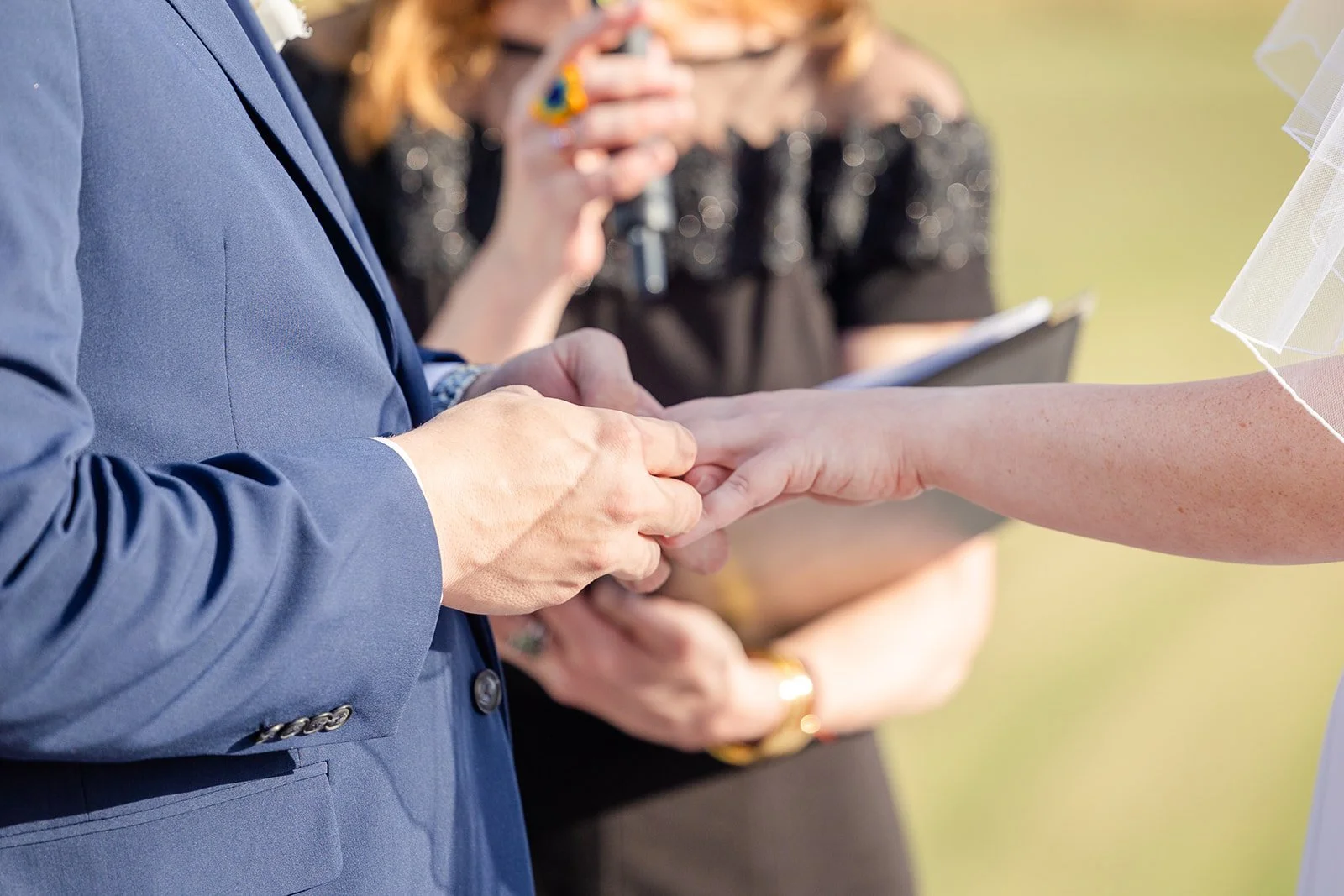
In Florida, your ceremony can be performed by an ordained member of the clergy, a judicial officer, a clerk of court, or a Florida Notary Public.
That last one surprises people. Florida is one of only a few states where notaries can legally solemnize marriages, and it's part of why I became one. As both your officiant and a Florida Notary Public, I can create your personalized ceremony and handle the legal side myself, no separate courthouse visit required.
Step 4: Have Your Ceremony, Your Way
Here's the part couples worry about most, and the part with the fewest rules. Florida law doesn't require specific vows, religious language, or any particular script. Your ceremony can be spiritual, secular, or somewhere in between. It can include a handfasting ritual, blend two cultures and three families, or be forty-five seconds long on a paddleboard. Legally, all that matters is that you both declare your intent to marry in front of your officiant.
That freedom is exactly why I love this work. Your ceremony gets to actually sound like you.
Step 5: File the License
After the ceremony, your officiant signs the license and it must be returned to the Clerk of Court within 10 days. When I officiate, I handle this filing for you. It's one of my favorite things to tell couples during planning: once the confetti settles, you have nothing left to do. Your certified marriage certificate arrives in the mail a few weeks later.
Quick Answers to Common Questions
-
Yes. There's no residency requirement, no waiting period for non-residents, and no blood test. That's why Florida is one of the most popular elopement destinations in the country.
-
No. Florida doesn't require witnesses on the marriage license, though there's space for them if you'd like to include someone special.
-
Yes, and every couple is warmly welcomed here. I'm proud to create affirming, inclusive ceremonies for all love.
-
Yes, if they meet the legal requirements, such as becoming a Florida notary or being ordained. If you love this idea but want it done well, I offer officiant coaching for a loved one that covers the legal steps, ceremony writing, and how to deliver it with confidence.
Ready to Make It Official?
The paperwork is the easy part. The ceremony, the words that open your marriage, is where the magic lives. If you're planning a wedding or elopement in Orlando or anywhere in Florida, I'd love to hear your story.
Schedule a free discovery call and let's create something that feels like you.
Jennie Landau is a Wedding Officiant, Certified Life-Cycle Celebrant®, and Florida Notary Public based in Orlando, creating inclusive, personalized ceremonies for every chapter of life.