
How to Write Wedding Vows That Sound Like You
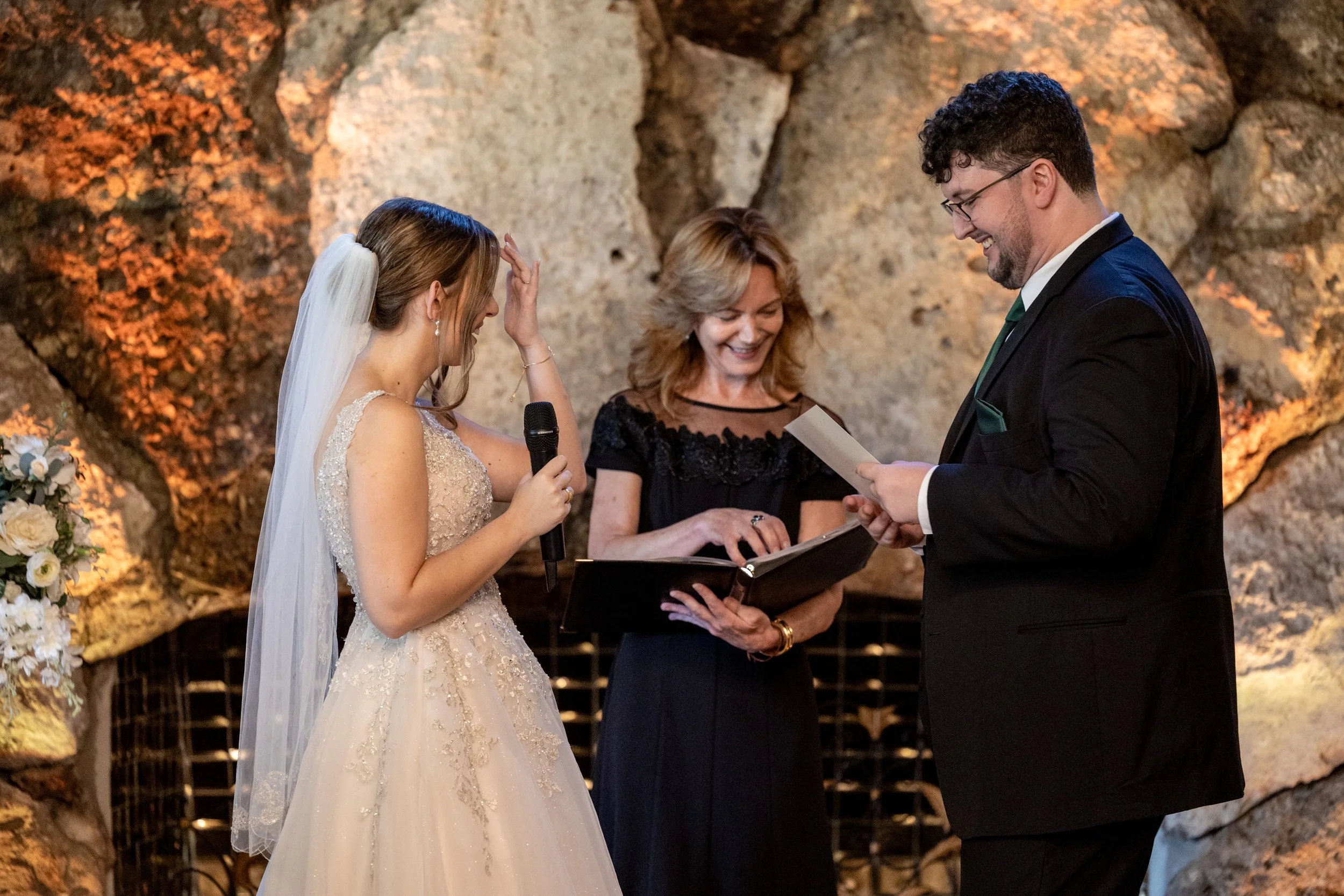
Here's a secret from someone who stands three feet away while vows are read: the ones that make everyone cry are almost never the most poetic. They're the most specific.
"I promise to love you forever" gets a warm smile. "I promise to keep pretending I don't know you eat cereal at 2am" gets a laugh, then tears, because everyone watching suddenly sees the real, particular life you two have built.
As a wedding officiant and Certified Life-Cycle Celebrant®, helping couples find those words is my favorite part of the job. So here's the process I actually use, blank page to final draft.
First, Decide Together What Kind of Vows You're Writing
Before either of you writes a word, have a ten-minute conversation and agree on:
Tone. Funny with a soft landing? Earnest all the way through? Most great vows are 70% heart, 30% humor, but the ratio should match you.
Length. One minute to ninety seconds each is the sweet spot. That's roughly 150 to 250 words. Agree on it so one of you doesn't deliver a haiku after the other reads a novella.
Whether you'll share them beforehand. Some couples keep vows secret until the ceremony. Others swap drafts. Both are lovely. Just decide together.
Whether personal vows replace or accompany the legal part. Good news: Florida doesn't require any specific vow language at all. As long as you both declare your intent to marry in front of your officiant, the words are entirely yours. If you're still sorting out the legal side, my guide to how to get married in Florida covers it.
Step 1: Gather Your Raw Material (Don't Write Yet)
The blank page is only scary when it's actually blank. Spend 20 minutes answering these, messily, in a notes app:
What's the first moment you thought, oh no, this is the person?
What's something they do that no one else knows about?
What's the hardest thing you've gotten through together, and what did it teach you about them?
What do they make possible in your life that wasn't possible before?
What's a tiny, ordinary moment with them that you'd relive over any vacation?
What are you genuinely promising? Not in general. To this specific human.
Don't edit. Don't be eloquent. You're mining, not polishing.
Step 2: Choose Two or Three Stories, Not Ten
Vows fall apart when they try to cover the whole relationship. Pick the two or three answers from your list that made you feel something as you wrote them. Those are your vows. Everything else is for the toast, the card, or the drive home.
Step 3: Use a Simple Structure
You don't need to be a writer. You need a shape. This one works nearly every time:
Open with them, not the crowd. Skip "we are gathered here." Start with their name and a truth: "Sam, the first time you made me laugh, I was trying to be mad at you."
Tell one or two specific moments. The cereal at 2am. The flat tire in the rain. The night in the hospital waiting room. Specific beats poetic, every single time.
Make your promises. Two to four of them. Mix one funny with a few real: "I promise to always kill the spiders. I promise to choose you, out loud and on purpose, on the ordinary Tuesdays, not just days like this one."
Land on forever. One closing line that looks forward: "Whatever comes, I want to be standing next to you when it does."
Step 4: Write Badly, Then Cut
Write a draft that's too long and too messy. Then cut it by a third. Read it out loud, because vows are a spoken thing, and anywhere your mouth stumbles, your guests' ears will too. Swap any word you'd never say in real life. If you don't say "cherish" at breakfast, don't say it at the altar.
Step 5: Practice Out Loud, Then Protect the Moment
Read them aloud at least three times before the wedding. Not to memorize, just so your mouth knows the road.
Then, on the day:
Print them. Phone vows mean a lock screen photo of you squinting at a phone. Write or print them on a card, or use a small vow book.
Give a copy to your officiant. I always carry backup copies of my couples' vows. Nerves misplace things.
Pause when the feelings come. If your voice breaks, let it. Nobody at your wedding is grading you. That crack in your voice is the moment everyone remembers.
If You're Stuck, Steal These Openers
"I wrote seventeen drafts of this, and every one started with the same sentence: I can't believe I get to marry you."
"You know me better than anyone, so you already know I'm going to cry through this."
"When people ask how I knew, I tell them about the Tuesday you..."
"I'm not going to promise you perfect. I'm going to promise you something better."
Take one, make it yours, and the rest will follow.
And If Writing Really Isn't Your Thing
That's what I'm here for. Vow help is part of how I work with couples. Sometimes that's a set of prompts and a gentle deadline, sometimes it's a full conversation where I take notes and shape your words into something you can stand up and read. The vows stay yours; I just help you find them. It's one piece of how I create each ceremony from the couple's actual story, and if you want a ritual woven around your vows, a handfasting pairs beautifully with them.
Quick Answers to Common Questions
-
Aim for one minute to ninety seconds each, roughly 150 to 250 words. Long enough to say something real, short enough that every line earns its place.
-
Not at all. Traditional vows, a mix of traditional and personal, or repeat-after-me vows led by your officiant are all beautiful options. Florida law doesn't require any specific wording.
-
It's up to you. Keeping them secret makes for a powerful ceremony moment, while sharing drafts helps you match tone and length. Many couples compromise by sharing them with their officiant, who can flag a mismatch without spoiling the surprise.
-
Start gathering notes about a month out and have a full draft two weeks before the wedding. The week-of is for practicing out loud, not for staring at a blank page.
Your Words, Your Way
The couple who wrote their vows in a shared note over three weeks, the groom who read his off a bar napkin on purpose because that's where he wrote his first draft, the bride who sang one line because she couldn't say it without music. Those are the ceremonies people talk about for years. Yours can be one of them.
Schedule a free discovery call and let's make sure every word of your ceremony, vows included, sounds like you.
Jennie Landau is a Wedding Officiant, Certified Life-Cycle Celebrant®, and Florida Notary Public based in Orlando, creating inclusive, personalized ceremonies for every chapter of life.